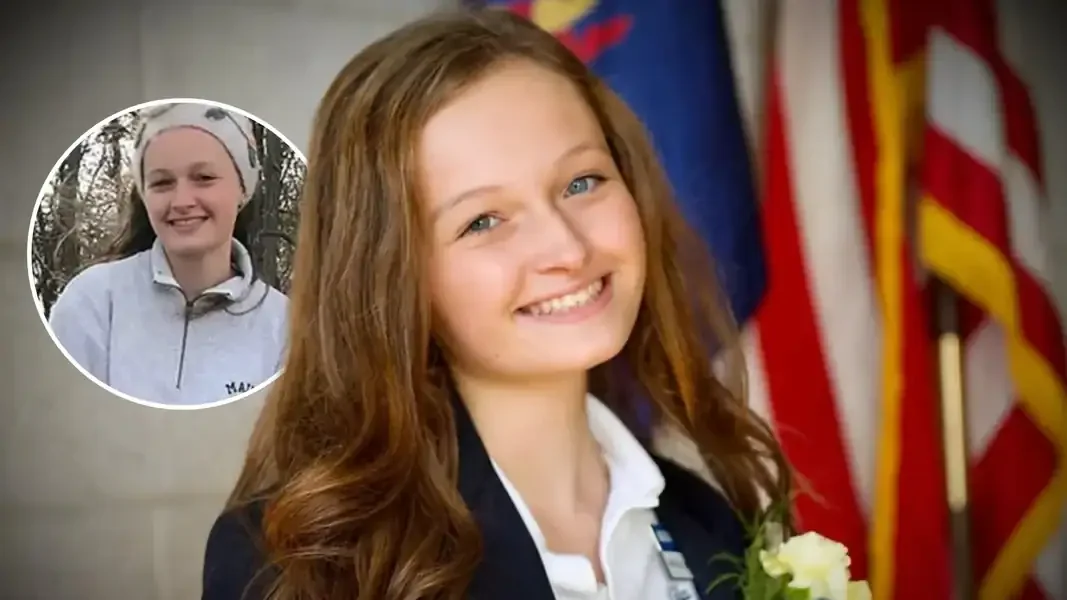



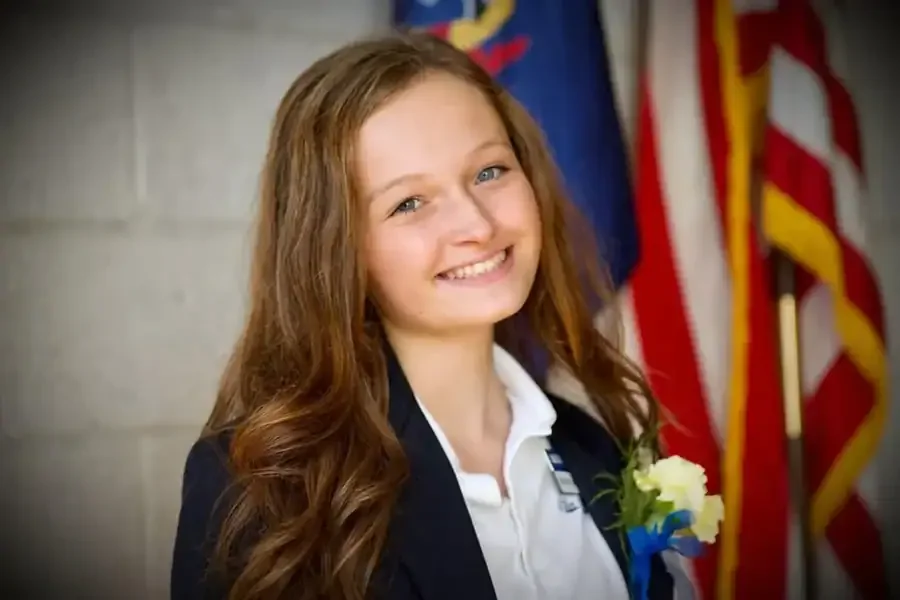
Maria Middleton, an American young woman who died at 18 after living with an inoperable brain tumor, has had a canonization cause approved by the United States Conference of Catholic Bishops. The effort seeks recognition of her faith and commitment to social service. If she completes every step required by the Catholic Church, she could become the first saint of Generation Z.
Born in Pennsylvania in 2002, Maria grew up in a Catholic family. At age 11, she began recording religious reflections in a diary, a practice that continued to be part of her life. She also enjoyed sports, Irish dance and music. At Villa Joseph Marie High School, she performed well academically and served as class president.
Community service was another part of her routine. Maria took part in coat drives, prepared meals for older adults, distributed Christmas gifts and visited nursing homes. Before she became ill, she was also helping organize an annual benefit event to raise money for children with cancer.
Those activities provide context for the attention her life has received during the Church’s consideration of her cause. The process is not based only on an account of a person’s religious beliefs or charitable work. It involves reviewing information about the person’s life and the way that life is understood within the Church’s standards for possible sainthood. In Maria’s case, the initiative described by the bishops focuses on her faith and social commitments, as well as accounts of how she faced serious illness.
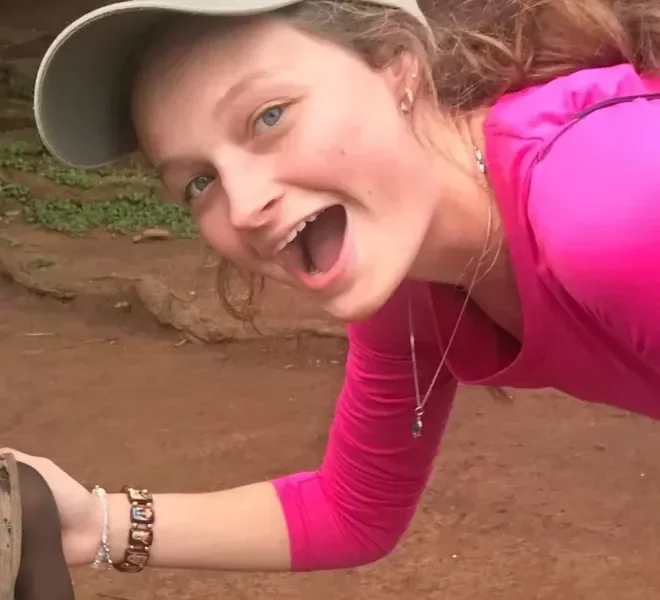
In 2019, when she was 16, Maria was diagnosed with an inoperable tumor in the brainstem. Doctors estimated at the time that she had between nine and 12 months to live. Despite her illness, she remained involved in religious activities. About nine months after the diagnosis, she traveled with her parents to Uganda, where she participated in a humanitarian and religious mission.
The brainstem is the part of the brain that connects it with the spinal cord and is involved in essential functions and pathways that support movement and other bodily abilities. The source account does not identify the tumor’s specific type, and it does not provide additional medical details about her diagnosis or treatment. It reports that, as the cancer progressed, Maria gradually lost movement, hearing, and the ability to swallow and speak.
She died on Oct. 8, 2020, shortly after turning 18. The account of her final years describes a period in which the disease increasingly limited her physical abilities, while her earlier diary entries and community work remained important parts of the story shared by her family and supporters.
One of the last messages Maria was able to write in her diary was “Think Hope.” The phrase means “Think of hope” or “Think hope,” and it was placed on her gravestone. It also inspired the name of a foundation her parents established to continue social initiatives associated with their daughter. The benefit event she had helped organize was also renamed in her honor as the Hope-A-Thon.
The phrase has therefore become linked both to Maria’s memory and to charitable work carried out in her name. The foundation and event are described as ways to continue initiatives connected with her interest in helping others. They are separate from the Church’s formal evaluation of her possible sainthood: charitable projects can preserve a person’s legacy, while canonization follows a religious process with distinct requirements.
Maria’s life has drawn attention from the United States Conference of Catholic Bishops because of qualities described in connection with her story, including faith, hope, love and trust in God’s Providence during suffering. Her grave receives frequent visitors. There are also reports from people who attribute physical cures to her intercession. Those reports, however, have not been officially recognized by the Church as miracles.
That distinction is central to understanding the status of the cause. A report that someone recovered after asking for Maria’s intercession is not, by itself, an official finding that a miracle occurred. Such claims must be submitted and examined through the Church’s procedures. The investigation must assess the relevant testimony and records before a reported event can be considered in the formal process.
As part of the inquiry, the Archdiocese of Philadelphia published a notice asking people who knew Maria, or who have documents related to her life, to provide information. The request includes testimony, letters, manuscripts and diaries. The material is intended to help build a record of her life before the cause proceeds to the Vatican.
This kind of collection allows an investigation to draw on sources beyond a single account. Firsthand recollections can describe a person’s conduct and relationships, while written materials can provide information about what the person said or recorded. The notice asks for material that may assist in assessing Maria’s life; it does not mean that every submitted document or account will necessarily establish a particular conclusion.
The Church’s process also distinguishes between stages that are sometimes treated as interchangeable in everyday conversation. Beatification and canonization are separate steps. The account of Maria’s cause says that a miracle attributed to her intercession must be recognized for her to be beatified. A second miracle must be approved for her to be declared a saint through canonization.
In general terms, beatification is a step that precedes canonization, not a declaration that someone has already been made a saint. A cause therefore requires examination and approval at successive stages. The gathering of documents and testimony described by the Archdiocese is part of the investigation into Maria’s life, while the possible recognition of miracles is another requirement identified in the process. Neither reports of cures nor public interest alone complete those stages.
For now, Maria’s cause remains dependent on further review. The approval reported by the bishops allows the process to move forward, but it does not mean that she has been beatified or canonized. Her supporters’ accounts of her life, the material requested by the Archdiocese and any reported miracles must be considered according to the Church’s requirements.
If all the required steps are completed, Maria could become the first saint of Generation Z. That outcome remains conditional: the cause must advance through the remaining stages, including the recognition of the miracles required for beatification and canonization. Until then, the Church’s investigation continues, while her family’s foundation and the Hope-A-Thon carry on social initiatives associated with her life.